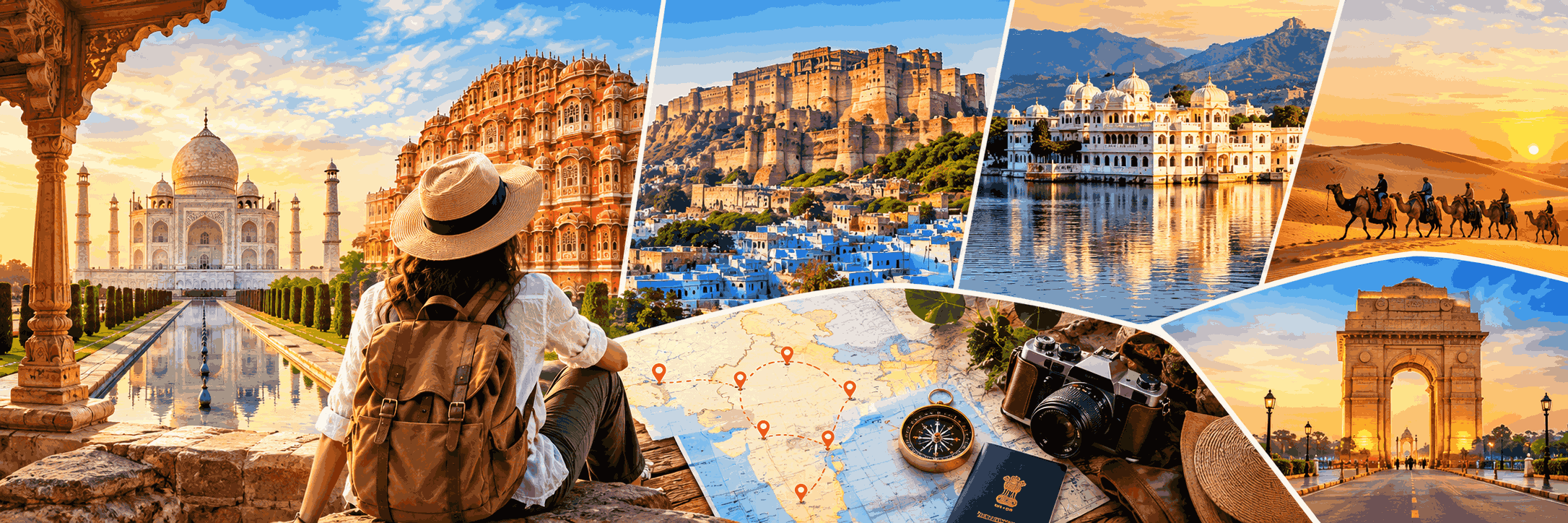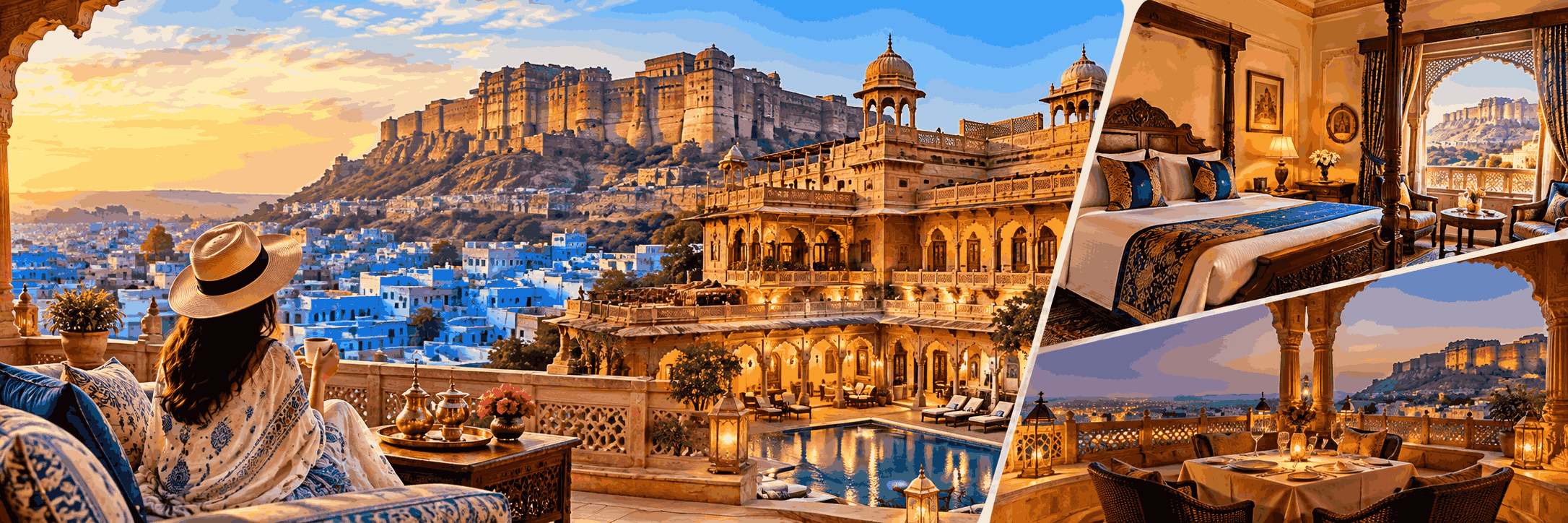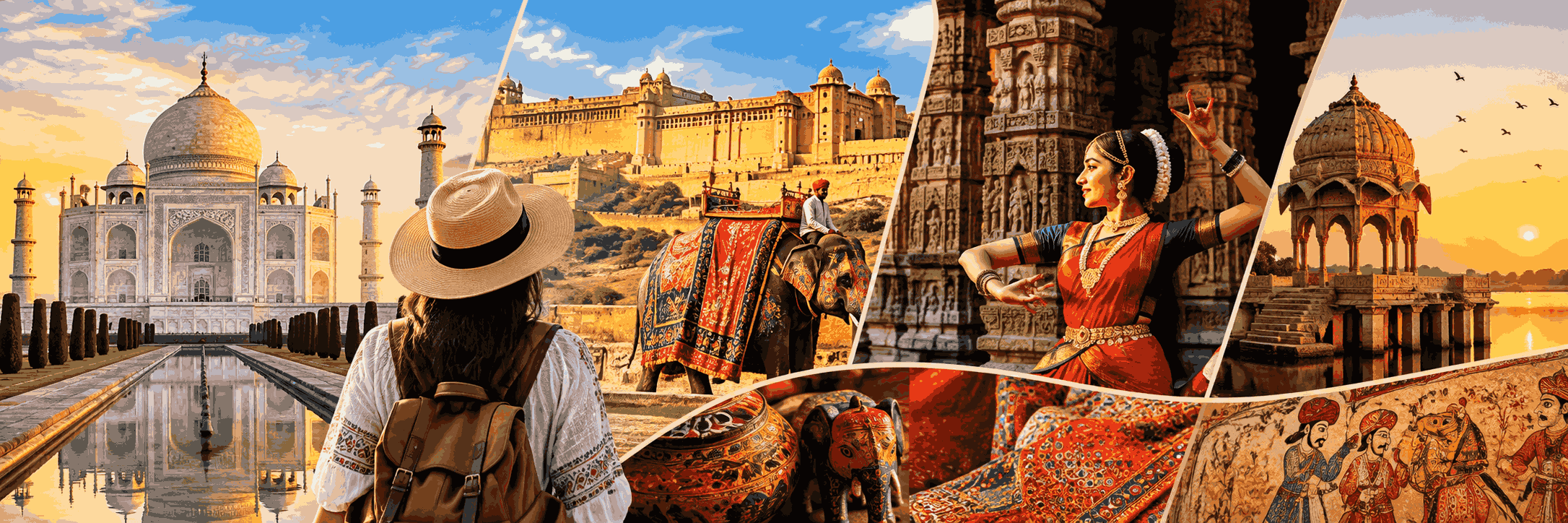
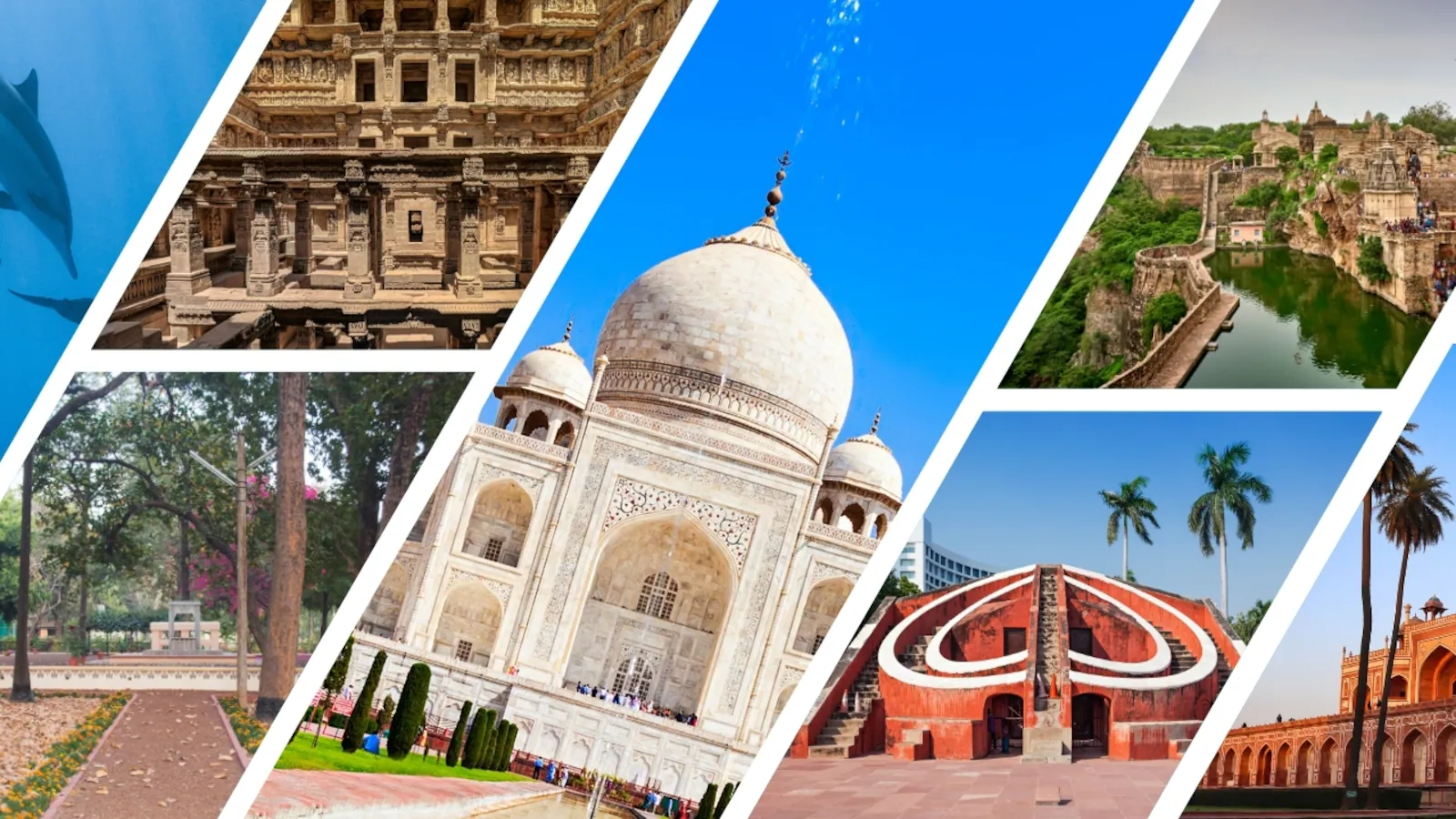
India is one of the world's most extraordinarily rich heritage destinations. With 42 UNESCO World Heritage Sites — a collection that spans ancient Buddhist monasteries, Mughal imperial capitals, medieval Hindu temple complexes, colonial-era railways, and pristine natural landscapes — India offers heritage travelers a lifetime of exploration within its borders.
Whether you are planning your first visit to India or are a seasoned heritage traveler looking to go deeper, this comprehensive guide will take you through India's most significant UNESCO sites, organized by region, with practical travel advice, historical context, and guidance on how to experience each site authentically.
At India Heritage Journey, we have built our tours around these extraordinary places — not just to visit them, but to truly understand them.
Why UNESCO World Heritage Sites Matter
The UNESCO World Heritage designation is awarded to sites that have 'outstanding universal value' — meaning they represent something so exceptional about human creativity, cultural exchange, or natural beauty that they belong, in a sense, to all of humanity, not just the country in which they are located.
For travelers, UNESCO sites represent a guarantee of historical and cultural significance. But what makes traveling to these sites in India particularly special is that so many of them are not museums frozen in amber — they are living, breathing places where traditions continue, where prayers are offered in temples built a thousand years ago, and where local communities have maintained ancient crafts and practices for generations.
Here is your regional guide to India's most significant UNESCO World Heritage Sites and how to experience them.
North India: The Mughal Heartland
1. Taj Mahal, Agra (1983)
Perhaps the most recognized building on Earth, the Taj Mahal was commissioned by Emperor Shah Jahan in 1632 as a mausoleum for his wife Mumtaz Mahal, who died in childbirth. Built over 21 years by more than 20,000 artisans from across Central Asia, Persia, and India, the Taj Mahal represents the pinnacle of Mughal architecture — a tradition that synthesized Persian, Islamic, Ottoman, and Indian artistic traditions.
What most travelers miss: The Taj Mahal complex extends far beyond the central mausoleum. Explore the symmetrical garden with its reflecting pool, the two identical sandstone buildings flanking the tomb (one a mosque, one a 'jawab' or echo building), and the riverside terrace offering views of the Yamuna.
Best visited: At sunrise. The marble changes color throughout the day — pale pink at dawn, brilliant white at noon, and golden at sunset.
2. Agra Fort (1983)
Often overshadowed by its more famous neighbor, Agra Fort is one of India's finest examples of Mughal military and palace architecture. Built primarily by Emperor Akbar in 1565 from locally quarried red sandstone, then expanded by his grandson Shah Jahan in white marble, the fort served as the main residence of the Mughal emperors for nearly a century.
Walk through the Diwan-i-Am, the Diwan-i-Khas, and the white marble Mussaman Burj tower — the octagonal tower from which the imprisoned Shah Jahan spent his final years gazing at the Taj Mahal across the Yamuna River.
3. Humayun's Tomb, Delhi (1993)
Built in 1570, Humayun's Tomb was the first garden-mausoleum on the Indian subcontinent, and it set the architectural template that would culminate, 80 years later, in the Taj Mahal. Designed by Persian architect Mirak Mirza Ghiyas, it introduced the concept of a massive central dome rising above a square plinth surrounded by a geometric Persian garden.
The tomb complex contains the remains of more than 100 Mughal royals, earning it the nickname 'Dormitory of the Mughals.'
4. Qutub Minar Complex, Delhi (1993)
The Qutub Minar — a 73-meter-tall minaret built in 1193 by Qutub-ud-din Aibak, the founder of the Delhi Sultanate — is one of the oldest Islamic structures in India and the world's tallest brick minaret. The surrounding complex contains India's oldest mosque (Quwwat-ul-Islam), an enigmatic 4th-century Iron Pillar that has not rusted in 1,600 years, and the ruins of several medieval structures.
5. Red Fort Complex, Delhi (2007)
Built by Shah Jahan as the palace complex of his new capital Shahjahanabad (Old Delhi), the Red Fort served as the seat of Mughal power from 1648 to 1857. Its massive red sandstone walls enclose an extraordinary complex of palaces, audience halls, gardens, and pavilions — and it was from the Red Fort's ramparts that India's first Prime Minister, Jawaharlal Nehru, delivered his famous 'Tryst with Destiny' speech on Independence Day in 1947.
6. Fatehpur Sikri (1986)
Built by Emperor Akbar in 1571 as his new capital, Fatehpur Sikri was abandoned just 15 years later — possibly due to water scarcity. This near-perfect preservation makes it one of India's most fascinating and photogenic UNESCO sites. The complex includes the grand Buland Darwaza gateway (54 meters tall), Jodha Bai's Palace, the Panch Mahal, and the exquisite Salim Chishti dargah where pilgrims still come to pray.
7. Jantar Mantar, Jaipur (2010)
Built by Maharaja Jai Singh II of Jaipur in 1734, Jantar Mantar is an extraordinary collection of 19 astronomical instruments — including the world's largest stone sundial, the Samrat Yantra, which can measure local time to within two seconds. At a time before telescopes, this observatory was at the cutting edge of astronomical science.
Rajasthan: The Land of Kings
8. Hill Forts of Rajasthan (2013)
This UNESCO designation covers six magnificent Rajput hill forts: Chittorgarh, Kumbhalgarh, Ranthambore, Gagron, Amber, and Jaisalmer. Together they represent the zenith of Rajput military architecture and the extraordinary warrior culture of medieval Rajputana.
Amber Fort (Jaipur): The most visited, a stunning blend of Rajput and Mughal design overlooking Maota Lake, with the dazzling Sheesh Mahal (Hall of Mirrors) as its centerpiece.
Chittorgarh: The largest fort in India, and a place of legendary tales of Rajput valor and sacrifice — including the mass self-immolation (Jauhar) of 13,000 Rajput women to avoid capture by the Mughal army in 1568.
Jaisalmer Fort: A 'living fort' — one of the largest in the world — where approximately 3,000 people still live within the 12th-century sandstone walls rising from the Thar Desert.
Kumbhalgarh Fort: Home to the world's second-longest wall (after the Great Wall of China) at 36 kilometers, largely unknown to the tourist mainstream.
Central India: The Temple Heartland
9. Khajuraho Group of Monuments (1986)
Built between 950 and 1050 CE by the Chandela dynasty, the 25 surviving temples of Khajuraho in Madhya Pradesh represent one of the greatest achievements of medieval Indian temple architecture. Famous worldwide for their extraordinarily detailed erotic sculptures on the outer walls, the temples are far more than their famous friezes — they are complex theological statements about the nature of existence, desire, and spiritual liberation.
Only about 10% of the sculptures are erotic; the rest depict celestial beings, gods, animals, hunting scenes, and daily life in extraordinary detail.
10. Buddhist Monuments at Sanchi (1989)
Sanchi in Madhya Pradesh contains the oldest stone structures in India, including the Great Stupa commissioned by Emperor Ashoka in the 3rd century BCE. The carved gateways (toranas) surrounding the stupa are among the finest examples of early Buddhist art, depicting scenes from the Jataka tales (stories of the Buddha's previous lives) in extraordinary detail.
11. Rock Shelters of Bhimbetka (2003)
Bhimbetka in Madhya Pradesh contains rock shelters with paintings that are among the oldest evidence of human settlement in South Asia, dating back over 30,000 years. The paintings depict hunting scenes, dances, animals, and early human life in remarkable detail and clarity.
South India: Dravidian Splendor
12. Group of Monuments at Hampi (1986)
The ruins of Hampi in Karnataka were once the capital of the Vijayanagara Empire (1336–1646), one of the greatest kingdoms in Indian history with a population of over 500,000 at its peak — making it one of the world's largest cities of the medieval era. The ruins spread across 25 kilometers of boulder-strewn landscape and include temples, royal enclosures, market streets, royal baths, and the magnificent Vittala Temple with its famous Stone Chariot.
13. Group of Monuments at Mahabalipuram (1984)
Located on the Coromandel Coast of Tamil Nadu, the Pallava-era monuments of Mahabalipuram (7th–8th century CE) include remarkable rock-cut caves, bas-reliefs, temples, and structural temples. The Shore Temple, standing at the edge of the Bay of Bengal since the 8th century, is one of the most atmospheric heritage sites in India.
14. Great Living Chola Temples (1987)
The three Chola temples — Brihadeeswarar Temple at Thanjavur, Brihadeeswarar Temple at Gangaikonda Cholapuram, and Airavatesvara Temple at Darasuram — represent the extraordinary artistic and architectural achievements of the Chola dynasty (9th–12th centuries). The Brihadeeswarar Temple at Thanjavur, built in 1010 CE, features an 80-meter-tall vimana (tower) that casts no shadow at noon — a feat of engineering that continues to astonish modern architects.
Planning Your UNESCO Heritage Tour of India
With 42 UNESCO sites spread across the country, planning a comprehensive heritage tour of India requires expert guidance, efficient routing, and deep cultural knowledge. Here are key principles:
Cluster sites geographically: North India's Mughal sites, Rajasthan's hill forts, Central India's temples, and South India's Dravidian monuments each form natural circuits.
Allocate minimum half a day per major site: UNESCO sites reward time and exploration. Rushing through them means missing what makes them extraordinary.
Engage a certified heritage guide: The stories behind these sites — the politics, the symbolism, the human dramas — transform a visual experience into a profound one.
Visit during shoulder season (October-November, February-March): Cooler weather, fewer crowds, and better light for photography.
Combine with living culture: Each UNESCO site exists within a living cultural landscape — explore the surrounding towns, markets, and communities.
Explore India's UNESCO Heritage with India Heritage Journey
India Heritage Journey specializes in crafting heritage tours that do justice to India's extraordinary UNESCO World Heritage Sites. Our expert guides, carefully designed itineraries, and deep local knowledge ensure that your experience goes far beyond surface sightseeing.
→ View Our India Heritage Tour Packages
→ Golden Triangle Tour — Delhi, Agra & Jaipur UNESCO Sites
→ Rajasthan Cultural Tour — UNESCO Forts & Palaces